It’s usually around October when I can tell which first-year teacher is struggling. It shows up in the emails to the office, the walkie calls, and the para who keeps showing up at the principal’s door. And by March, if nothing changes, that teacher is quietly updating their resume.
I’ve coached a lot of first-year special education teachers, and here’s what I’ve learned. They rarely need another PD day. They need someone in the room with them, looking at the same problem they’re looking at, and a few systems that make the job feel doable.
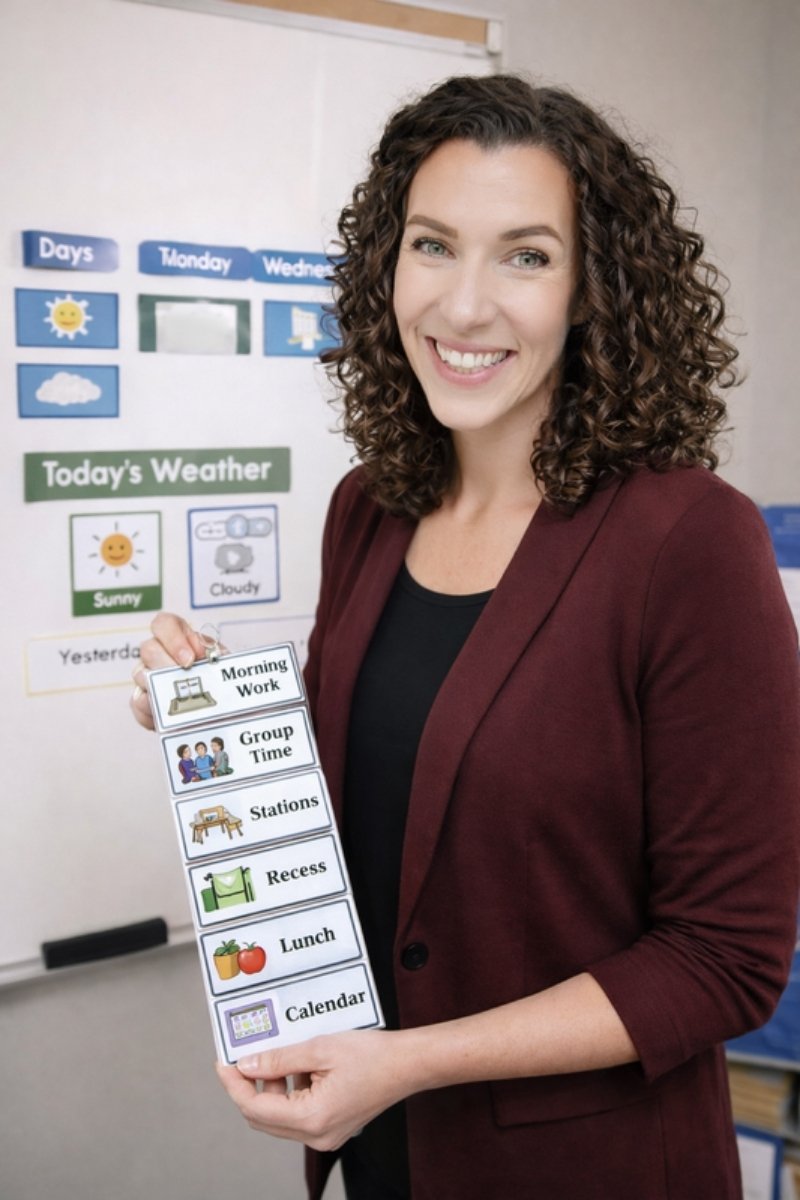
Here are six supports I’d put in place for every new special education teacher.
1. Give them a classroom that’s already set up to work
Many first-year special education teachers walk into an empty room, or a room full of someone else’s materials, and are expected to build a whole program in a week. That’s a lot. A starter set of visual schedules, a basic station layout, and a sample daily schedule gives them somewhere to begin. They can make it their own later.
2. Coach in the classroom, not just in meetings
Talking through a problem in a meeting helps. Watching it happen together helps more. One hour of side-by-side coaching during the hardest part of the day often solves what three after-school meetings couldn’t.
3. Help them lead their paraprofessionals
New teachers are often supervising adults for the first time, and sometimes those adults have been in that classroom much longer than they have. That’s awkward for everyone. Give them a simple tool, like a one-page plan for every adult, and coach them on how to introduce it. It shifts the conversation from “I’m telling you what to do” to “here’s how our room works.”
4. Walk them through their first IEPs
Writing that first IEP alone is scary. Review the first two or three together. Talk through present levels, measurable goals, and how they’ll collect data. That early time saves hours of revisions later and builds confidence that lasts.
5. Protect their planning time
In a lot of special education classrooms, planning time disappears into coverage, meetings, and paperwork. If a new teacher never has time to prep, the classroom slowly unravels. Guarding even two blocks a week makes a real difference.
6. Check in on how they’re doing, not just what they’re doing
First-year special education teachers carry a lot. A five-minute check-in that starts with “How are you holding up?” tells them someone sees how hard this is. It’s simple, and it matters more than you’d think.
Where to start this week
If six things feels like a lot, start small. Here’s what I’d do in the next five school days:
- Visit each new teacher during the toughest part of their day, and just watch.
- Ask them one question: “What part of your day feels the hardest right now?”
- Pick one fix together, like a visual schedule, a para plan, or a finished bin, and set a date to check back.
- Put their next two IEP meetings on your calendar so you can review the drafts before they go out.
None of this takes a big budget. It takes attention, and a plan that shows first-year special education teachers they don’t have to figure this out alone.
Support first-year special education teachers before spring
Turnover in special education is expensive, for budgets and for students who lose the consistency they need most. The best time to help a new teacher stay is now, before March.
If you’d like help supporting your new teachers, I offer new teacher coaching, classroom setup support, and training for teams. Read more about my special education services for schools and districts, or email me at [email protected].
And if you’re heading to the Council for Exceptional Children convention in March, stop by our table. I’d love to talk about what your new teachers need.